A location scouting and management platform for creative professionals
About the Company
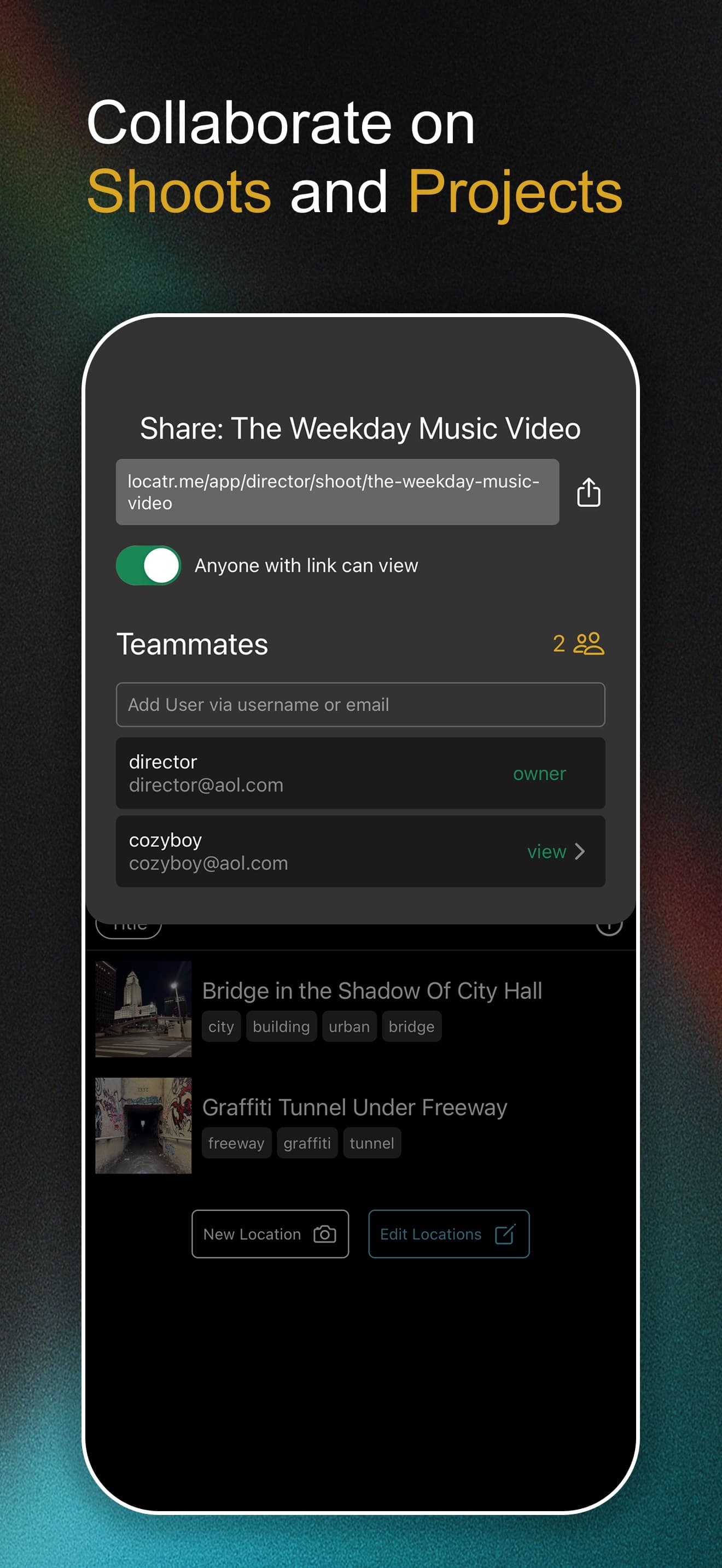
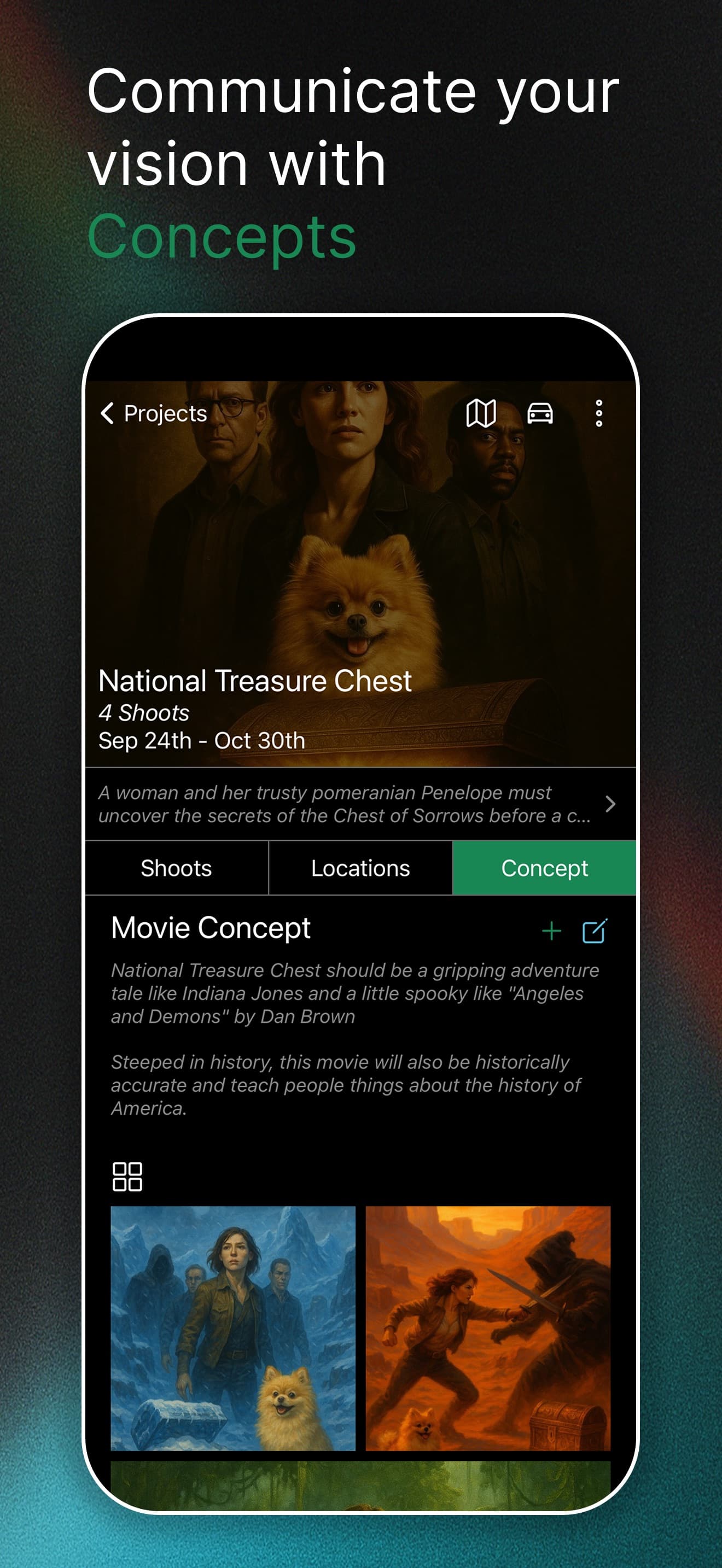
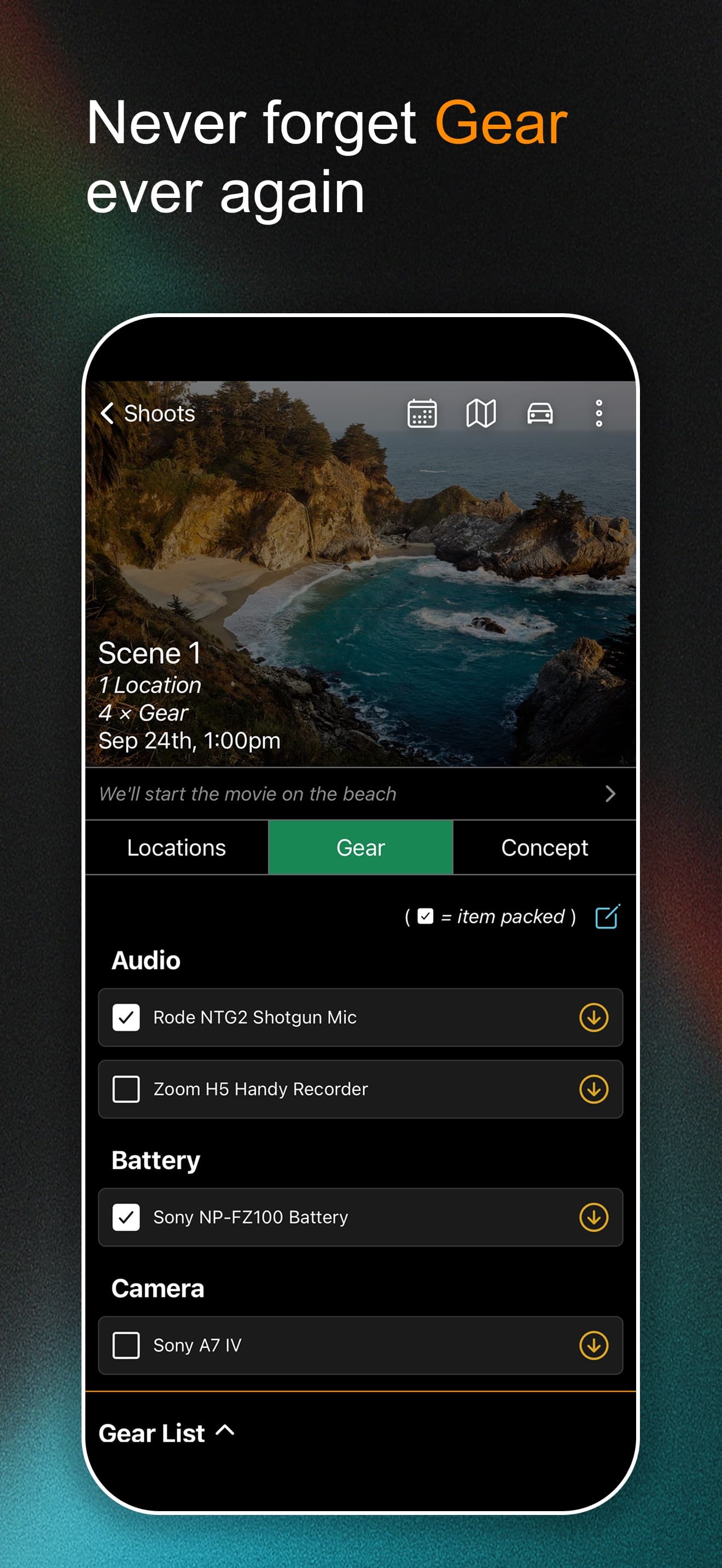
Locatr is a cross platform mobile and web application that aims to streamline location scouting, planning, and collaboration between professional photographers and videographers on shoots of all scales, ranging from full scale film productions to boutique one-person content creators.
My Story
I built Locatr because I saw a gap in the market for a tool that would allow professional photographers and videographers to easily organize and plan their shoots. As a freelance photographer and videographer myself, I have organized and been apart of many shoots myself and I knew how much time and effort could be saved by having a tool to help with the planning process. There is currently no other effective tool on the market that caters to this specific use case.

Location Services
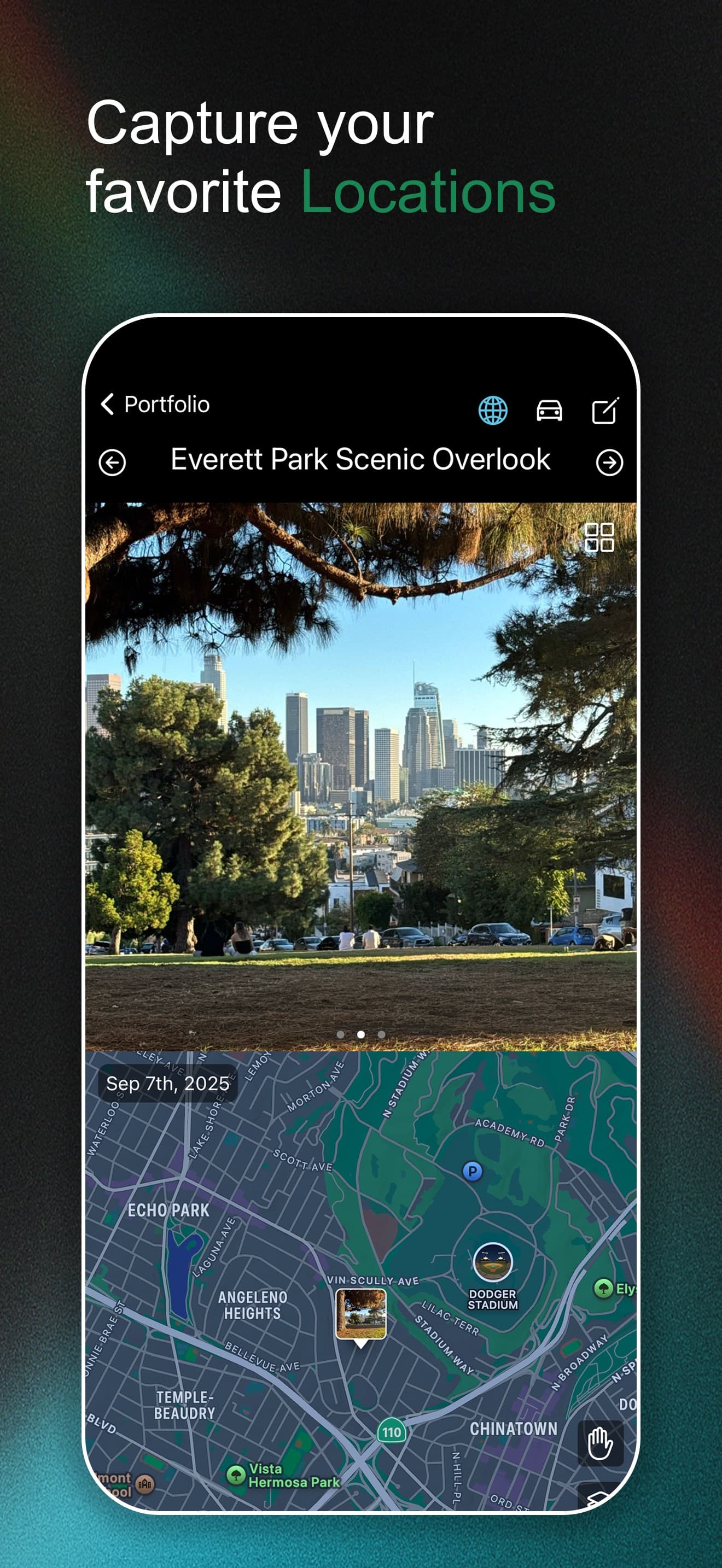
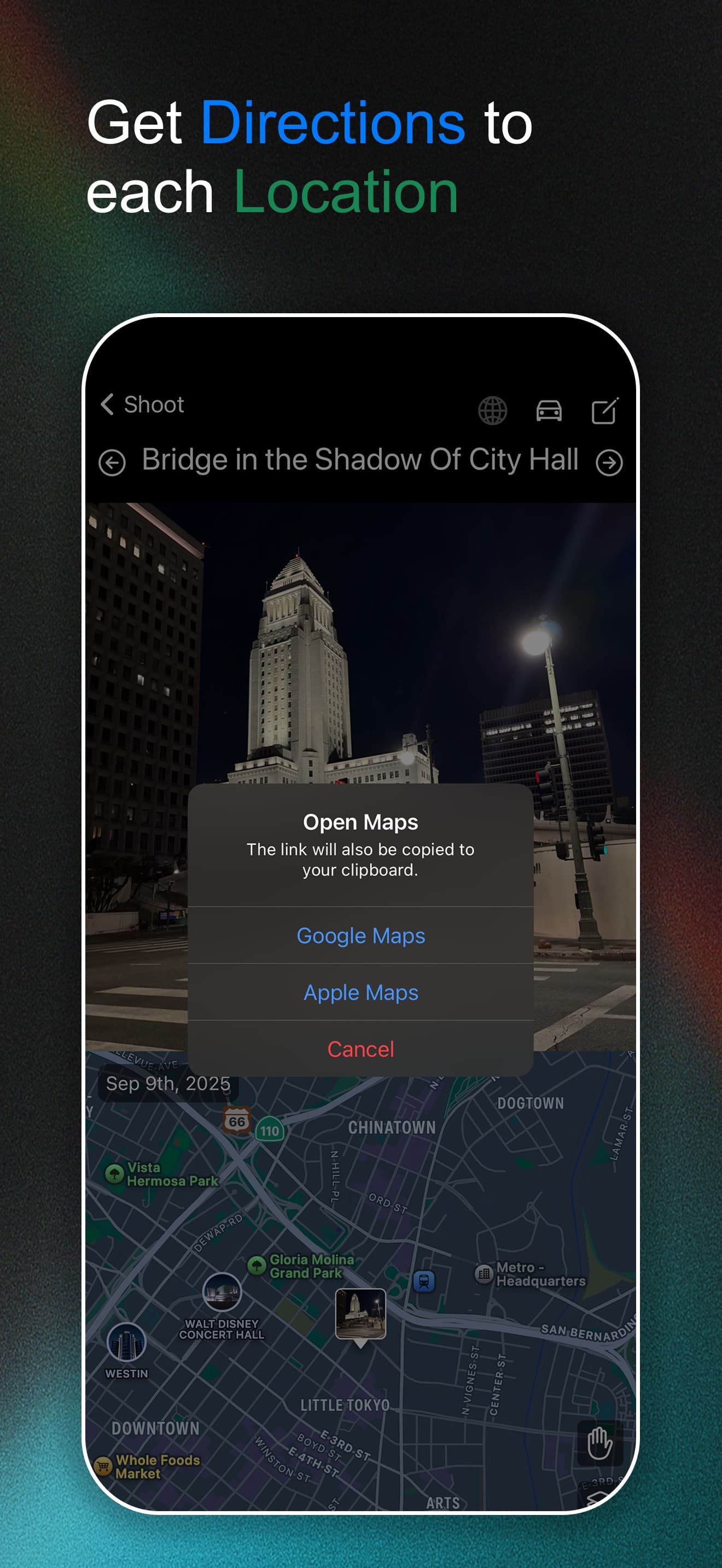
Locatr leverages core location services and the Google Maps API to power its mapping and location-based features. This allows users to easily search for locations, get directions, and view location details all within the app.
Discover Mode
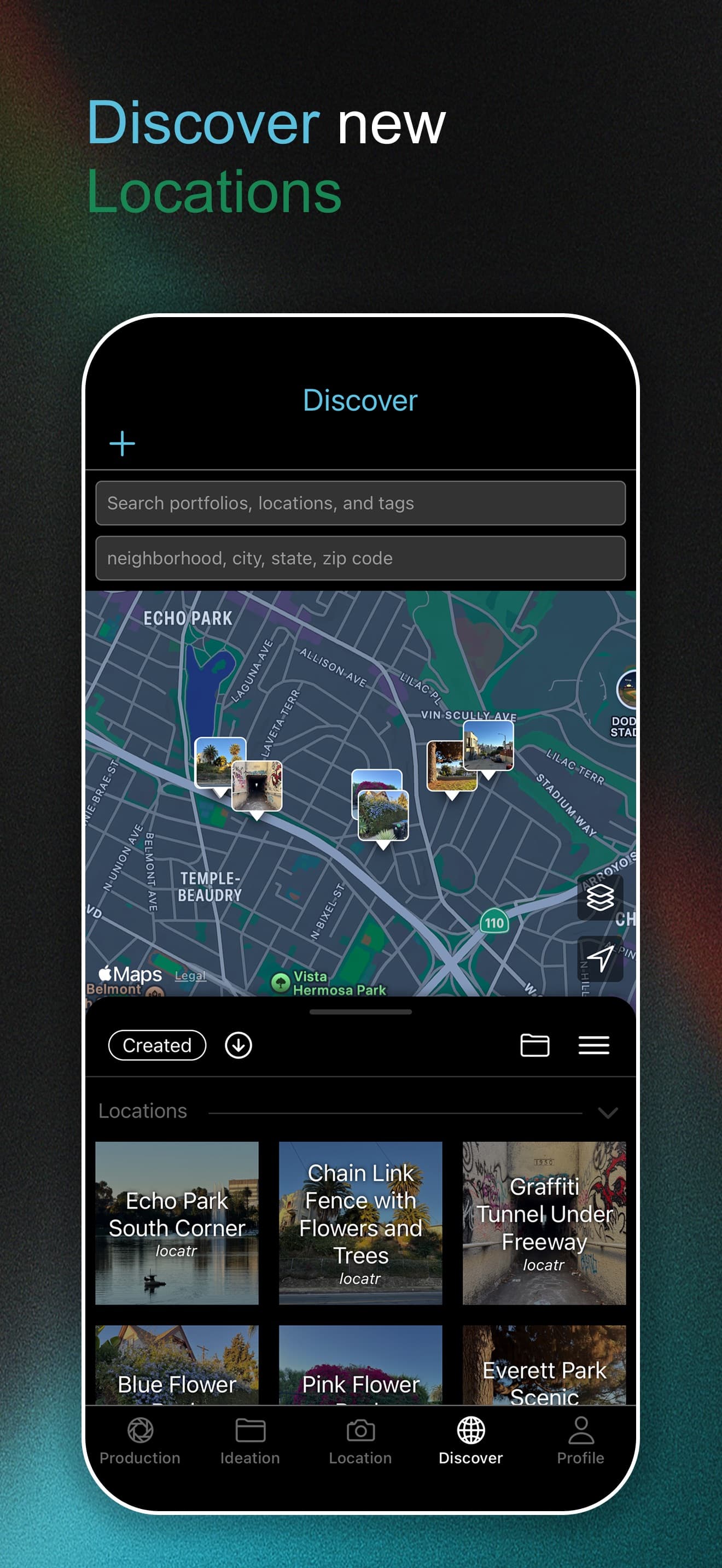
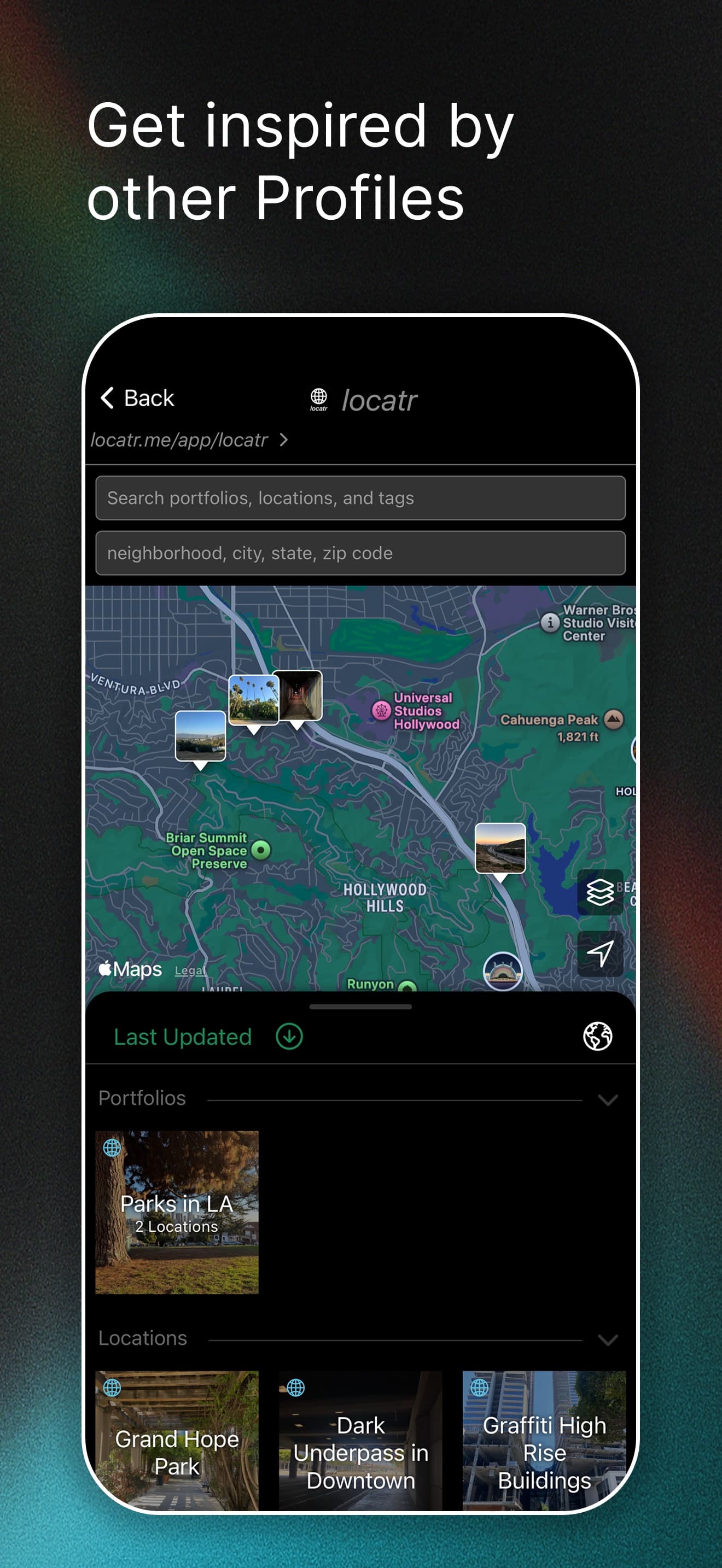
Much like Yelp, Locatr allows users to discover locations and view details about them. Building the discover search algorithm was a major challenge that required solving complex geographic coordinate problems. I implemented a progressive zoom-out mechanism that searches within cartesian coordinate bounds, automatically expanding the search region when no results are found while respecting world boundaries (180° latitude, 360° longitude). The algorithm efficiently queries both portfolios and standalone locations, handles user blocking, supports text-based filtering across multiple fields, and intelligently removes duplicates while maintaining optimal map region centering.
Camera & Photo Services
Locatr allows users to take photos of locations and add them to their portfolios. The camera implementation was built to leverage the full capabilities of modern mobile devices, dynamically detecting and supporting multiple camera lenses (ultra-wide, wide, telephoto, LiDAR) available on different iPhone models. I implemented a sophisticated camera system that handles physical zoom levels (28mm, 35mm, 2x) switching across each decices hardware capabilities, manages camera permissions and lifecycle states, and automatically embeds GPS coordinates into photo EXIF data for location tagging. The system also handles image manipulation, compression, and media library integration, ensuring photos are properly saved with accurate location metadata.
Map View
The Map View is a sophisticated interactive interface that combines a draggable bottom sheet with a real-time map display. I implemented a pan gesture handler system that allows users to smoothly drag the sheet up and down, with animated transitions that respond to drag velocity and direction. The map dynamically renders markers for both locations and portfolios, with intelligent filtering that only shows items within the current map region bounds. The system supports multiple view modes (Discover, Profile, Public Profile) with distinct behaviors, complex sorting across multiple keys and directions, and swipeable row actions for favorites, duplication, and deletion. I built a region-based search system that integrates with Google Maps API for address geocoding, handles map type toggling (standard/hybrid), and implements GPS-based location centering with proper coordinate conversion. The component manages collapsible sections, pull-to-refresh functionality, and sophisticated empty states that adapt based on the current view mode and filter settings.
Backend & Database
Locatr is built on a robust AWS infrastructure using App Runner for containerized application deployment, providing scalable and cost-effective serverless compute. The backend leverages AWS Amplify to host the frontend, with SSO authentication implemented using Redis for session management and token caching. All user-uploaded images are stored in S3 with proper access controls and CDN distribution. The database layer uses PostgreSQL for reliable relational data storage, with Sequelize as the ORM to provide type-safe database queries, migrations, and model relationships. This architecture ensures high availability, scalability, and maintainability while keeping infrastructure costs manageable.
The Mono Repo
I built a custom monorepo architecture that enables code sharing across the entire Locatr ecosystem. The monorepo structure allows me to create shared packages with TypeScript types that are synchronized across the web frontend, mobile app, and backend services, ensuring type safety and consistency throughout the application stack. This architecture also enables component reuse between the mobile app and web frontend, reducing code duplication and maintaining design consistency. By centralizing shared logic, types, and components, the monorepo significantly improves development velocity, reduces bugs from type mismatches, and ensures that changes to shared code are immediately reflected across all platforms.